Westminster Abbey
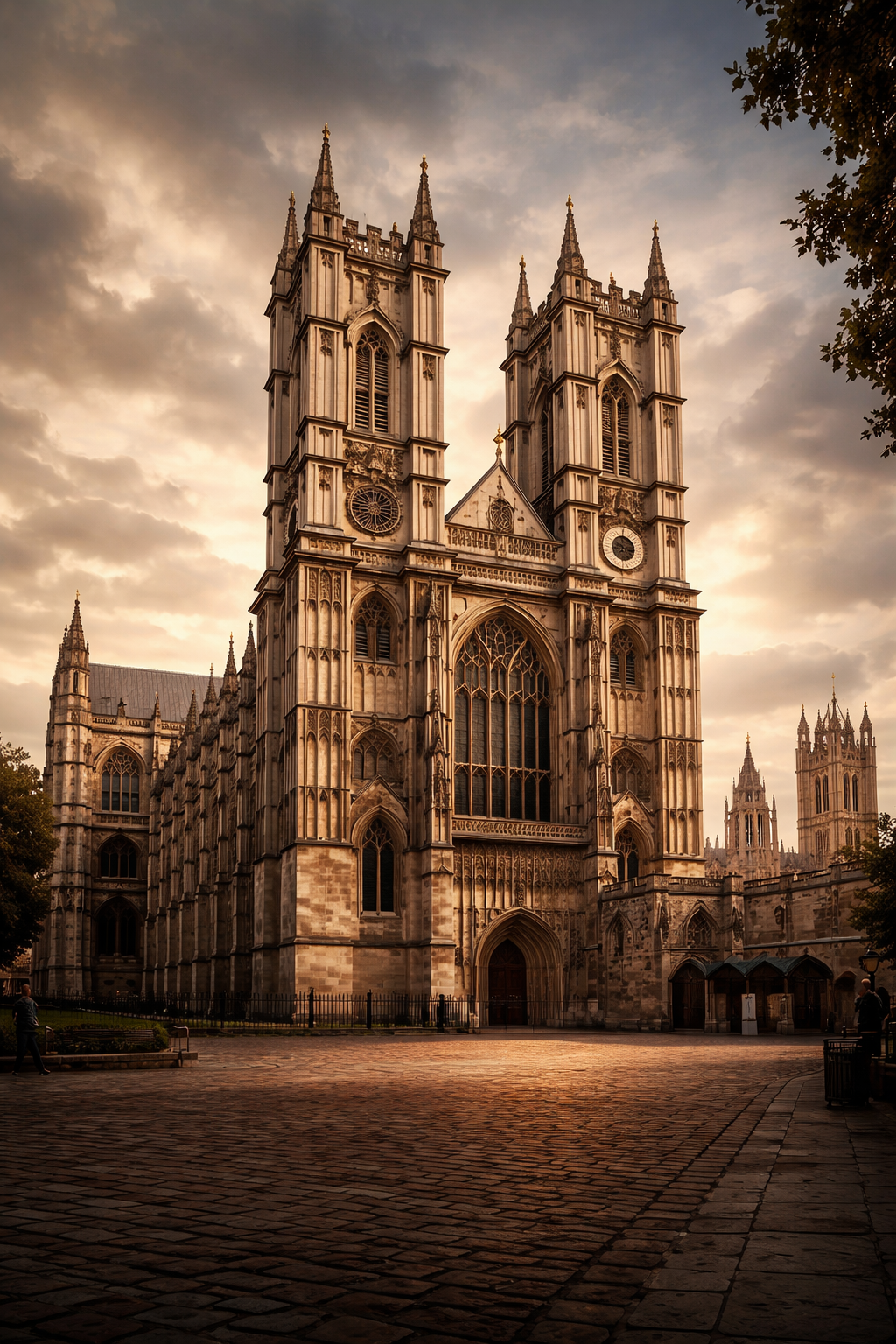
Britain's Royal Church
Westminster Abbey stands as one of the most significant religious buildings in the world and the spiritual heart of the British nation. For nearly a thousand years, it has been the coronation church of English and British monarchs, the site of royal weddings, and the final resting place of kings, queens, poets, scientists, and statesmen.
Saxon and Norman Origins
A Benedictine monastery was established on this site, then known as Thorney Island, as early as the 7th century. The church's importance grew dramatically under Edward the Confessor, who rebuilt the abbey in the Romanesque style and was buried there in 1066. William the Conqueror chose to be crowned at Westminster on Christmas Day 1066, establishing a tradition that continues to this day.
Henry III's Gothic Masterpiece
The present church is largely the work of Henry III, who from 1245 demolished Edward the Confessor's building and created the magnificent Gothic structure we see today. Inspired by the great French cathedrals of Reims and Amiens, Henry's abbey features soaring pointed arches, flying buttresses, and England's tallest Gothic nave at 102 feet high.
The Coronation Church
Every English and British monarch since William the Conqueror has been crowned in Westminster Abbey, with only two exceptions—Edward V and Edward VIII, neither of whom was crowned. The Coronation Chair, made in 1296 to enclose the Stone of Scone, has been used in every coronation since 1308. The most recent coronation, that of King Charles III in 2023, continued this unbroken tradition.
Royal Weddings and Funerals
The Abbey has witnessed numerous royal weddings, including those of Queen Elizabeth II and Prince Philip (1947), and the Duke and Duchess of Cambridge (2011). It has also been the setting for significant state funerals, most notably that of Queen Elizabeth II in 2022, which brought millions of viewers worldwide to witness the historic ceremony.
Poets' Corner
The south transept houses the famous Poets' Corner, where many of Britain's greatest writers are buried or commemorated. Geoffrey Chaucer, the first to be buried here in 1400, was joined over the centuries by Edmund Spenser, Charles Dickens, Thomas Hardy, and Rudyard Kipling. Memorials honor those buried elsewhere, including Shakespeare, Jane Austen, and the Brontë sisters.
The Lady Chapel
The Henry VII Lady Chapel, added in the early 16th century, is considered one of the finest examples of Perpendicular Gothic architecture. Its spectacular fan-vaulted ceiling appears to hang suspended in space, and the chapel houses the elaborate tombs of Henry VII and his queen, Elizabeth of York, as well as Elizabeth I and Mary Queen of Scots.
Scientists and Statesmen
Beyond royalty and literature, the Abbey honors Britain's scientific and political achievements. Isaac Newton, Charles Darwin, and Stephen Hawking are commemorated in the nave. The Unknown Warrior, buried in 1920, represents the countless soldiers who gave their lives in the First World War.
A Living Church
Despite its role as a national monument and major tourist attraction, Westminster Abbey remains an active church. Daily services continue the tradition of worship that has continued for over a thousand years. The Abbey is a "Royal Peculiar," meaning it falls under the direct jurisdiction of the monarch rather than any diocese.
Visiting Today
Visitors can explore the Abbey's magnificent interior, including the royal tombs, Poets' Corner, the Chapter House, and the Cloisters. The Queen's Diamond Jubilee Galleries, opened in 2018 in the medieval triforium, offer stunning views of the nave and display treasures from the Abbey's collection.
Opening Hours
Monday - Friday: 9:30 - 15:30
Saturday: 9:00 - 15:00
Sunday: Open for worship only (no tourist visits)
Last entry 1 hour before closing. Hours may vary during special events and services.